|
If you are having problems viewing this email, click here.
|
|
|
|
|
| July 2026 |
|
|
|
|
This issue features latest findings on early diagenetic dolomitization in methane seep carbonates, highlights the successful conclusion of our thematic session at the 2026 IDSSD Global Conference, and announces COESS as the first Ocean Decade Project under CliMetS. But first of all, we would like to remind you of the approaching deadline of the Ocean Decade Project call!
Subscribe to our newsletter and catch our next wave of updates!
Please drop us a note at hkogml@ust.hk, if you wish to share your achievements, news or any updates in our next issue.
|
|
|
|
| Deadline Approaching! |

|
|
|
Call for Decade Actions No. 11/2026 Will Close Soon!
The Ocean Decade' Call for Decade Actions No. 11/2026 will close on 31 August 2026. As one of the participating programme in the Call, CliMetS welcomes all initiatives that align with our thematic and geological priorities.
To support proposal development, Dr. Glen Snyder from the CliMetS/MOCSI coordination team, who has successful experience with Decade Project endorsement, hosted two Zoom workshops in June. These workshops provided step-by-step guidance on the application process, practical tips, and responses to participant questions. please check out the workshop materials here if you missed them!
Applicants are also welcome to consult with Dr. Snyder directly (glensny@ust.hk) for guidance on project design and proposal writing.
We look forward to your submissions and future collaborations!
|
|
|
|
|
|
|
| Research Highlight |
|
|
|
Early diagenetic dolomitization in methane seep carbonates constrained by coupled Mo and Mg isotopes
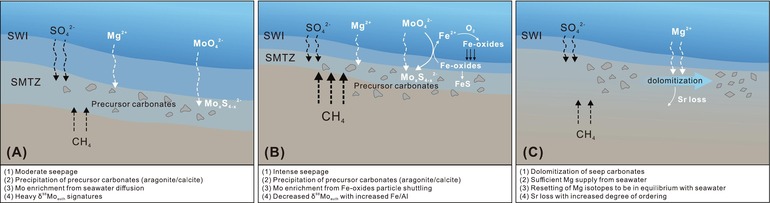
Jin, M., Jia, Z., and Li, J. et al. apply coupled molybdenum (Mo) and magnesium (Mg) isotope analyses to late Miocene–Pleistocene seep dolomite from Taiwan and modern analogues from the Gulf of Mexico and South China Sea to unravel low-temperature dolomitization in cold seeps. Variable δ98Mo values track shifts in methane flux and redox conditions, from diffusion- to oxide shuttle–dominated regimes, whereas uniform δ26Mg signatures indicate dolomitization in shallow, seawater-buffered porewaters with abundant Mg supply. Textural and geochemical features suggest early diagenetic replacement of precursor carbonates. The study highlights Mo–Mg isotopes as powerful tracers of seep redox evolution and supports seep dolomite as a reliable archive of ancient seawater Mg isotopes.
|
|
|
|
|
|
|
|
|
|
Natural gas hydrate production and CO2 storage via clathrate hydrates: Challenges and opportunities
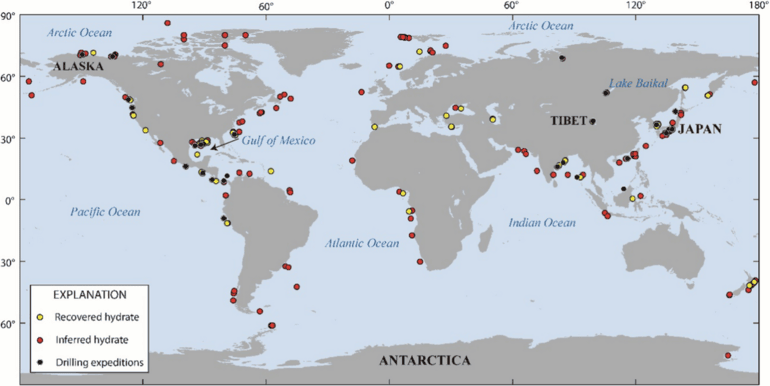
Mohamed, A. H., Sulaimon, A. A., and Tsegab, H. et al. review the potential of gas hydrates as a platform for CO₂ sequestration and energy applications. Addressing leakage risks in conventional geological storage, they evaluate hydrate-based CO₂ storage beneath marine sediments and permafrost as a potentially safer alternative. The review synthesizes advances in hydrate occurrence, thermodynamics, kinetics, and production methods, and examines technologies including CH₄–CO₂ hydrate replacement, gas separation, and transport. While depleted reservoirs may lower infrastructure costs and offer economic incentives, the authors emphasize the need for long-term field trials to assess storage capacity and stability in diverse marine settings.
|
|
|
|
|
|
|
|
|
|
Re‑sulfurization protects Fe(III) (oxyhydr)oxides in anoxic marine sediments of the South China Sea
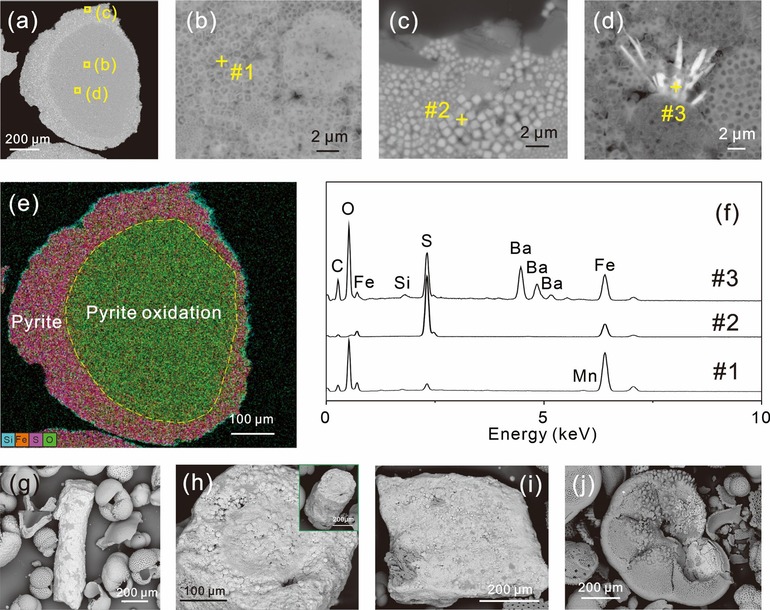
Zhou, J., Feng, J., Cao, J., et al. report an unexpected discovery of Fe (oxyhydr)oxide aggregates far below the sulfate–methane transition zone (SMTZ) in anoxic cold-seep sediments from the Shenhu area, northern South China Sea. Found at depths of ~80–160 mbsf, these nanoscale goethite and ferrihydrite aggregates occur as large spherical structures tightly coated by pyrite. Microanalyses indicate that the Fe(III) phases formed through pyrite oxidation by dissolved O₂ and Fe(III), and were subsequently preserved under reducing conditions by protective pyrite coatings. Associated trace element patterns show enrichment of Mn, Ba, Ni, Co, and organic carbon. Recurrent sulfurization–oxidation cycles underscore dynamic Fe–S coupling in deep cold-seep sediments.
|
|
|
|
|
|
|
|
|
|
Hydrostatic pressure drives metabolic strategies for anaerobic hydrocarbon degradation in cold seep sediments: from autonomy to syntrophic cooperation revealed by metagenomics
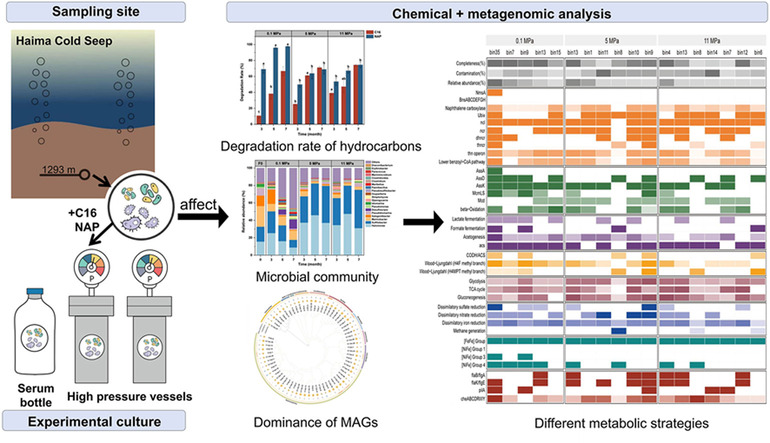
Using sediments from the Haima cold seep, Hao, Q., Jiang, L., Yu, H., et al. investigate how hydrostatic pressure influences anaerobic hydrocarbon degradation. Incubations amended with n-hexadecane and naphthalene at 0.1, 5, and 11 MPa showed that naphthalene was degraded more efficiently than n-hexadecane, although degradation was inhibited at higher pressures. Pressure also reshaped microbial communities: Marinobacter and Desulfoscipio dominated at 0.1 MPa, whereas Halomonas and Sulfitobacter persisted under elevated pressures. Metagenomics identified a Desulfotomaculia-affiliated bin capable of autonomous hydrocarbon degradation and sulfite reduction at low pressure. In contrast, high-pressure conditions favored Sulfitobacter, likely relying on syntrophic partnerships. The results suggest a pressure-driven shift from self-sufficient degradation to cooperative metabolism in deep-sea seep microbiomes.
|
|
|
|
|
|
|
|
|
|
Diversity and ecological interactions of archaeal community in the cold seep ecosystem
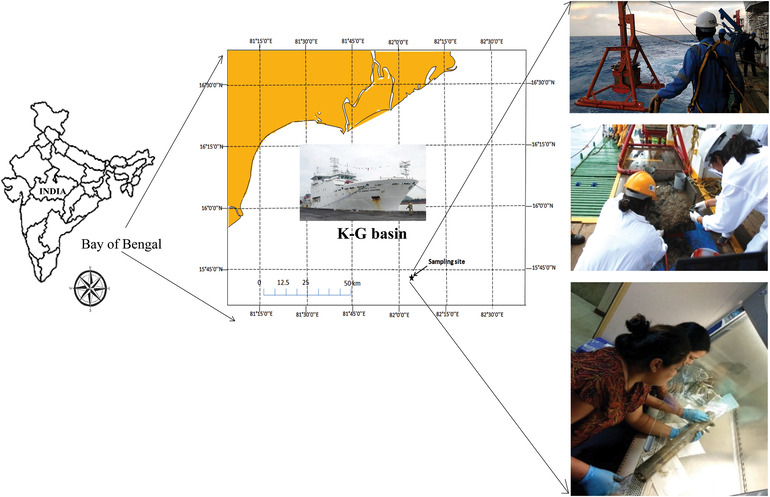
Nazareth, D. R., Gonsalve, M. J., and James, R. A. provide the first assessment of archaeal diversity in shallow cold seep sediments of the Krishna–Godavari Basin, Bay of Bengal. Using a culture-independent approach, they link community structure to geochemical gradients. Sediments rich in terrestrially derived organic carbon were dominated by Euryarchaeota, particularly diverse ANME groups, indicating active anaerobic methane oxidation and long-term carbon sequestration. Community composition was strongly controlled by TOC, methane, sulfate, nitrogen species, pH, and redox conditions. The presence of Nitrosopumilus further suggests coupled carbon fixation and nitrogen cycling in this Indian Ocean seep system.
|
|
|
|
|
|
|
|
|
A hot encounter at a cold seep: a new endemic Frigidoalvania Warén, 1974 (Mollusca: Caenogastropoda: Rissoidae) from the Arctic and its phylogenetic ties
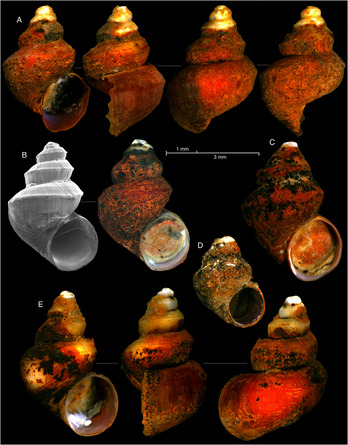
Nekhaev, I. O., Omarova, A., Matveeva, K., and Kokarev, V. describe Frigidoalvania krylovae sp. nov., the first confirmed seep-specialized rissoid gastropod from the Arctic, discovered at methane seeps in the Laptev Sea. Morphological and molecular (16S, 28S rRNA) analyses distinguish the species from congeners and place it in a lineage separate from F. cruenta, indicating polyphyletic Arctic origins. Restricted to bacterial mat habitats, stable isotope data suggest partial reliance on chemosynthetic production. The findings identify methane seeps as overlooked hotspots of Arctic endemism and highlight complex biogeographic connections across Atlantic and Pacific lineages.
|
|
|
|
|
|
|
|
|
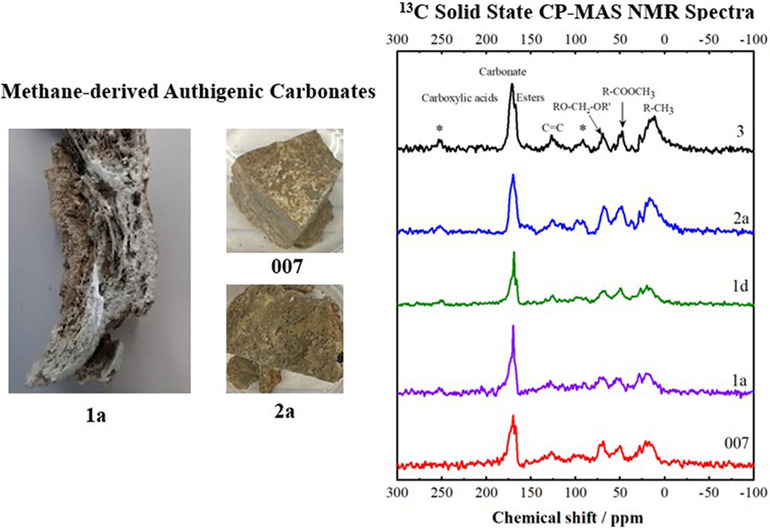
Progression of organic and inorganic matter in cold seep rocks during anaerobic oxidation of methane studied by solid-state NMR
Shi, Y., Schroedl, P., Marlow, J. et al. use ¹H, ¹³C, ³¹P, and ¹H-³¹P heteronuclear correlation solid-state NMR to trace organic and inorganic evolution in anaerobic methane oxidation (AOM) products of varying ages. They identify carboxylic acids as products of incomplete methane oxidation, alongside carbonate and aliphatic compounds. Aliphatic carbon—especially esters—increases with rock age, while orthophosphate dominates the phosphorus pool, with monoesters enriched in ~20,000-year-old samples. The study demonstrates NMR’s utility for probing authigenic carbonates and provides new insight into the geochemical maturation of methane-derived carbon at seeps.
|
|
|
|
|
|
|
| Across Our Network |
|
|
|
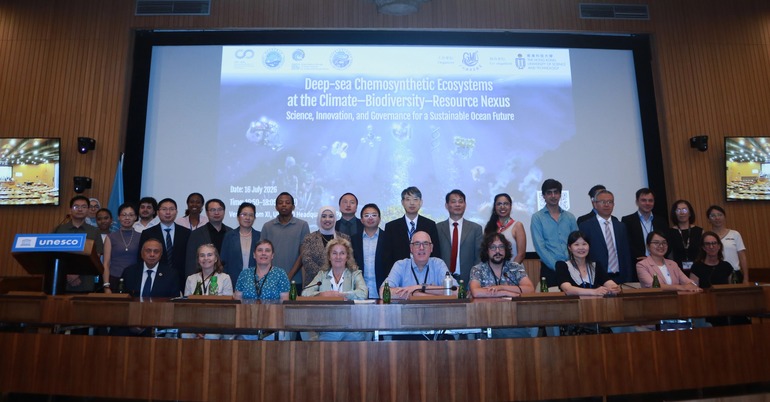
MOCSI and CliMets drives global actions on deep-sea chemosynthetic ecosystems at 2026 IDSSD Global Conference
On 16 July 2026, Guangzhou Marine Laboratory hosted a thematic session at UNESCO Headquarters in Paris during the 2026 Global Conference of the International Decade of Sciences for Sustainable Development (IDSSD). Titled “Deep-sea Chemosynthetic Ecosystems at the Climate-Biodiversity-Resource Nexus: Science, Innovation, and Governance for a Sustainable Ocean Future,” the hybrid event attracted over 100 international participants. Speakers emphasized the critical role of deep-sea chemosynthetic ecosystems in climate regulation, biodiversity conservation, and sustainable resource use. The session highlighted progress under the UNESCO-endorsed MOCSI and CliMetS programmes and called for strengthened global cooperation, data sharing, and science-based ocean governance.
|
|
|
|
|
|
|
|
|
|
CliMetS Welcomes Its First Ocean Decade Project: COESS
We are proud to announce the first Ocean Decade Project under the CliMetS programme: COESS (Chemistry, Observation, Ecology of Submarine Seeps). Endorsed as project by UNESCO-IOC under the UN Decade of Ocean Science for Sustainable Development in 2022, COESS represents a major step forward in coordinated global seep research.
Led by Prof. Hitoshi Tomaru (Chiba University) and Dr. Glen Snyder (The Hong Kong University of Science and Technology), COESS advances research on the chemistry, ecology, and long-term dynamics of submarine seeps. The project seeks to enhance public awareness of seep ecosystems and to better understand how seep-derived gases contribute to ocean–atmosphere interactions over time.
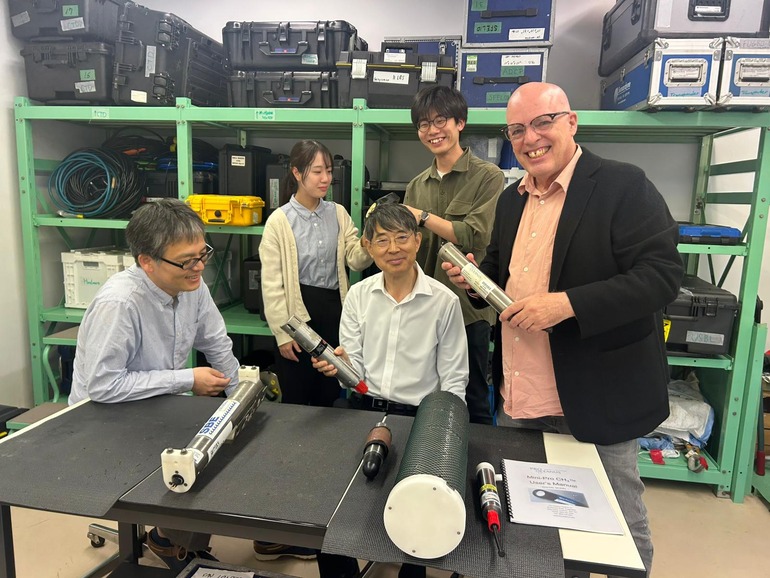
The COESS project currently involves over members of over 15 universities, primarily in Japan, and uses seafloor landers and underwater cameras to document life on the seafloor as well as changes in seep intensity over time. Equipment for investigation was provided by the company Fugro and is housed in the Lander Laboratory in Chiba University.
COESS aligns closely with CliMetS’ mission to strengthen global understanding of methane seeps and their climate relevance. Its integration under the CliMetS umbrella will foster scientific synergy, collaboration, and greater collective impact.
On 28 April, Prof. Peiyuan Qian, Chair of the Management Committee of CliMetS, visited the Chiba Unversity Lander Laboratory. Shown in the picture here are Professor Tomaru (left), Professor Qian (Center) and Dr. Snyder (Right), along with Chiba University Students. Together, they met to chart the way forward in this new research alliance.
|
|
|
|
|
|
|
|
|
|
CliMetS and MOCSI Empower Early-Career Scientists Through Haima Cold Seep Expedition
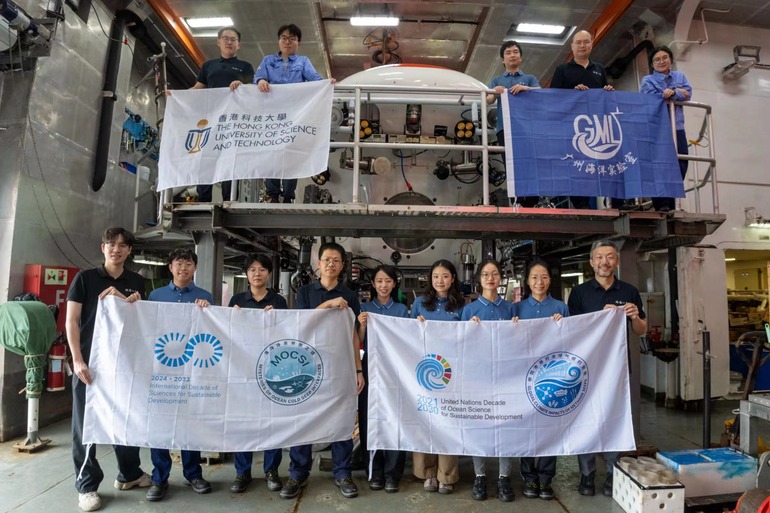
A team of 15 early-career researchers from Guangzhou Marine Laboratory and the Hong Kong University of Science and Technology joined a deep-sea expedition to the Haima cold seep in the South China Sea aboard the manned submersible Jiaolong, marking the first large-scale participation of Hong Kong early-career scientists in a national deep-diving mission. Led by Prof. QIAN Peiyuan and aligned with the UNESCO-endorsed CliMetS and MOCSI programmes, the expedition conducted multiple dives to 1,400 m, collecting biological, sediment, and water samples. The mission underscores CliMetS and MOCSI’s strong commitment to empowering early-career scientists through hands-on deep-sea exploration, international collaboration, and capacity building in methane seep and climate research.
|
|
|
|
|
|
|
| Around the World |
|
|
|
UNESCO warns of persistent global science divides in first Science Decade Global Report
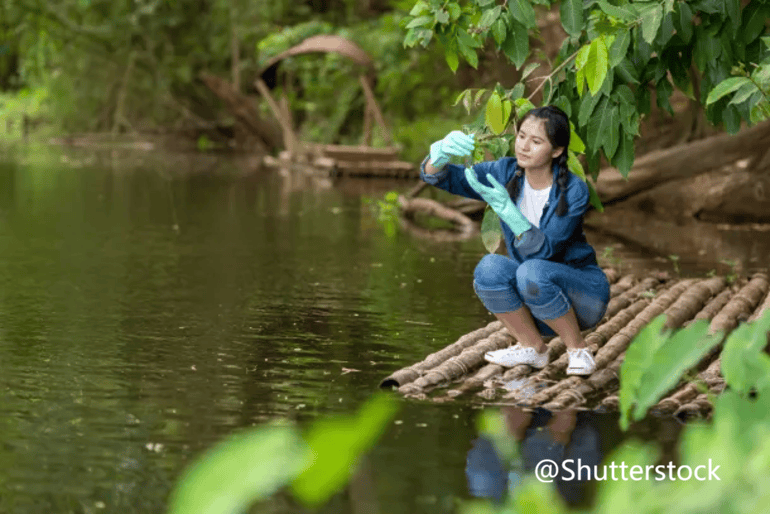
At the opening of the 2026 Global Conference of the International Decade of Sciences for Sustainable Development (IDSSD), UNESCO released new data highlighting both strong scientific mobilization and widening global disparities. The first Global Report documents 397 endorsed initiatives across 79 countries and USD 50 million in mobilized funding supporting all 17 SDGs. However, Africa accounts for less than 10% of initiatives despite representing 17.5% of the world’s population, and many projects cite coordination gaps as a major barrier.
The report calls for structural reforms in research incentives, open science implementation, equitable access, science–policy integration, and responsible governance of emerging technologies.
|
|
|
|
|
|
|
|
|
APMBC 2026 calls for registration
The 14th Asia-Pacific Marine Biotechnology Conference will be held from September 9-12, 2026, in Yantai, Shandong Province, China. Under the theme "Marine BioTech for Sustainable Human-Ocean Harmony," APMBC 2026 aims to establish itself as the premier marine biotechnology platform in the Asia-Pacific region, driving innovation, fostering international collaboration, and advancing the sustainable blue economy.
The conference will bring together leading scientists, industry experts, innovators, and policymakers to advance marine biotechnology and the sustainable blue economy. Registration is now open.
|
|
|
Date:
|
Sept 9-12, 2026
|
|
Venue:
|
Yantai, China
|
|
|
|
|
|
|
| Opportunities and Resources |
|
|
|
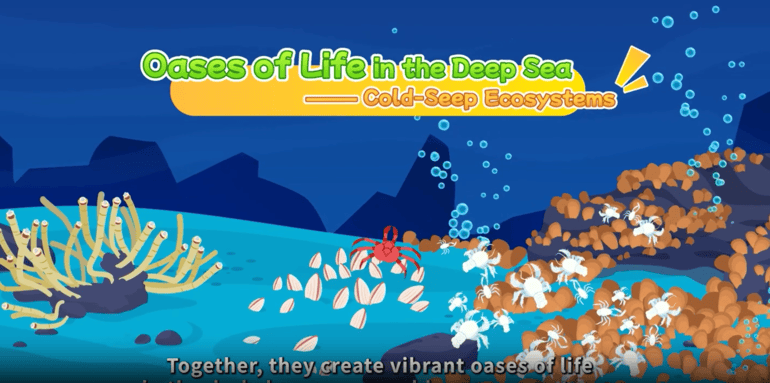
“Decoded Ocean”: Exploring Cold Seep Oases Through Animation
Guangzhou Marine Laboratory has launched Oases of Life in the Deep Sea, an animated series under its “Decoded Ocean” science outreach initiative. Designed to make complex deep-sea science accessible and engaging, the series introduces audiences to the mysteries of cold seep ecosystems and the extraordinary organisms that thrive in these dark, methane-rich environments. By combining scientific accuracy with vivid storytelling, the videos aim to strengthen public understanding of cold seeps and highlight their ecological significance and conservation value.
We warmly invite members of our network to explore and share these educational resources within your communities.
|
|
|
|
|
|
|
|
|
Have an update to share in our next issue — or feedback for us to improve?
Drop us a note at hkogml@ust.hk. Your contributions and insights help shape a stronger, more connected CliMetS/MOCSI community. |
| Copyright © HKUST. All Rights Reserved. Powered by MTPC. |
|
|