|
If you are having problems viewing this email, click here.
|
|
|
|
|
| June 2026 |
|
|
|
|
The highlights of this issue include major scientific findings on storage of ancient methane-derived carbon in deep-sea surface sediments, expanded understanding of methane-cycling diversity, and how Arctic and Nyegga seep systems demonstrate that methane-driven processes shape habitat complexity, biodiversity, and carbon export far beyond seep cores. It also features key international events and useful resources for Ocean Decade proposal drafting. Don't miss out!
Subscribe to our newsletter and catch our next wave of updates!
Please drop us a note at hkogml@ust.hk, if you wish to share your achievements, news or any updates in our next issue.
|
|
|
|
| Event of the Month |
|
|
|
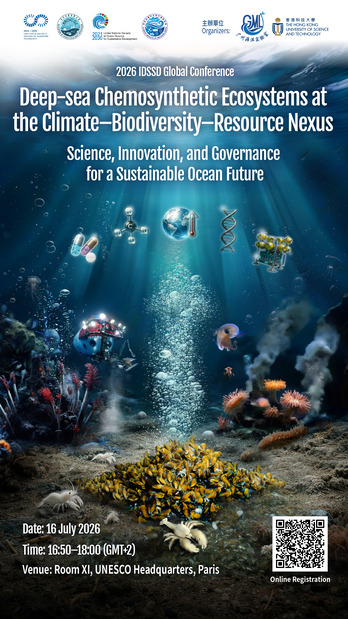
Join Us at the 2026 IDSSD Global Conference
Deep-Sea Chemosynthetic Ecosystems at the Climate–Biodiversity–Resource Nexus
16 July 2026 | 16:50–18:00 (GMT+2) | Room XI, UNESCO Headquarters | Hybrid Format
Deep-sea hydrothermal vents and methane seeps are among the planet’s most extraordinary—and least explored—ecosystems. Powered by chemical energy rather than sunlight, they shape carbon cycling, influence greenhouse gas dynamics, host unique biodiversity, and contain resources of growing economic interest.
At the 2026 Global Conference of the International Decade of Sciences for Sustainable Development (IDSSD), this thematic session will bring together leading international experts to explore how science, innovation, and governance can advance the sustainable stewardship of deep-sea chemosynthetic ecosystems. The session will feature focused synthesis presentations across climate processes, biodiversity, genetic resources, environmental impacts, emerging technologies, ocean governance, and new UN Decade programmes (MOCSI and CliMetS), followed by an interactive dialogue with participants.
We warmly welcome in-person attendance for those joining the IDSSD Global Conference at UNESCO Headquarters. The session will also be held in hybrid format, enabling global participation online.
To attend virtually, please register with your email through the link provided. The meeting link and access details will be shared with registered participants in due course.
|
|
|
|
|
|
| Research Highlight |
|
|
|
Efficient preservation of old methane-derived organic carbon in deep-sea surface sediments
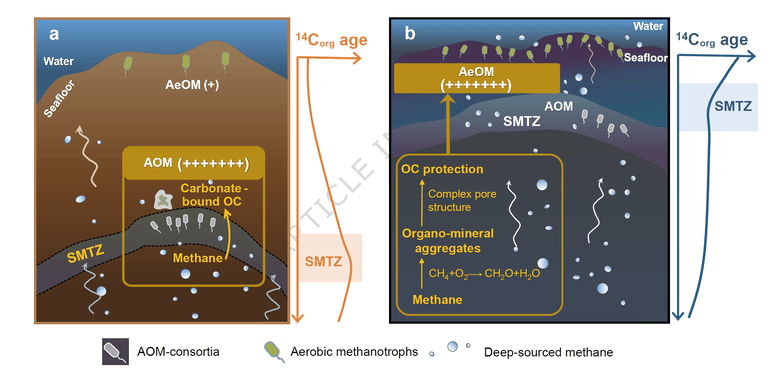
Bao, R., Che, Y., Liu, M. et al. investigate how methane-derived organic carbon (OC) is preserved in deep-sea methane seep sediments. Using carbon isotope and temperature-ramped analyses, the authors found that radiocarbon content in surface sediments correlates with the depth of the sulfate–methane transition zone. Results indicate that significant amounts of ¹⁴C-depleted OC originate from deep methane sources and are efficiently retained in seep sediments. The researchers propose that microbial aggregate formation at the sediment–water interface enhances preservation by physically shielding OC from oxygen exposure. They estimate that at least 6 teragrams of methane-derived OC are buried annually on global continental slopes, potentially reducing methane release to the atmosphere.
|
|
|
|
|
|
|
|
|
|
Developing a microfluidic-based epicPCR reveals diverse potential hosts of the mcrA gene in marine cold seep
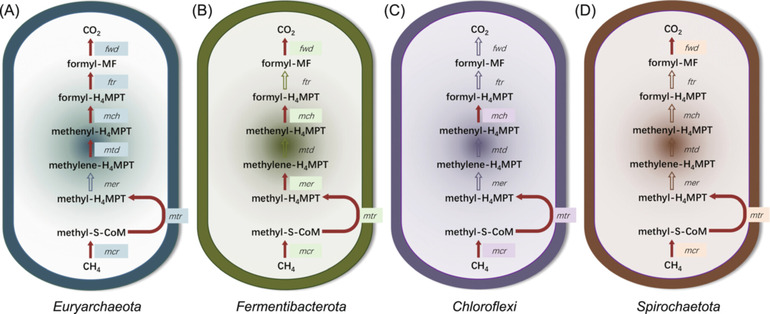
Anaerobic methanotrophic (ANME) microbes drive the anaerobic oxidation of methane (AOM) but remain poorly characterized due to their unculturable nature. This study developed a microfluidics-based epicPCR method to link the functional mcrA gene with 16S rRNA genes, enabling identification of its microbial hosts in marine cold seep sediments. Researchers detected 3,725 amplicon sequence variants spanning 78 genera and 23 phyla. Dominant groups included Euryarchaeota and several bacterial phyla, with community composition varying significantly by sediment depth. Phylogenetic analyses suggest horizontal transfer of mcrA among bacteria. Metagenomic evidence further indicates potential bacterial ANME lineages, expanding understanding of methane-cycling diversity and offering a new tool for studying uncultured functional microbes.
|
|
|
|
|
|
|
|
|
|
Life on the edge: distinctive and diverse communities in the chemotone peripheral to Arctic seeps
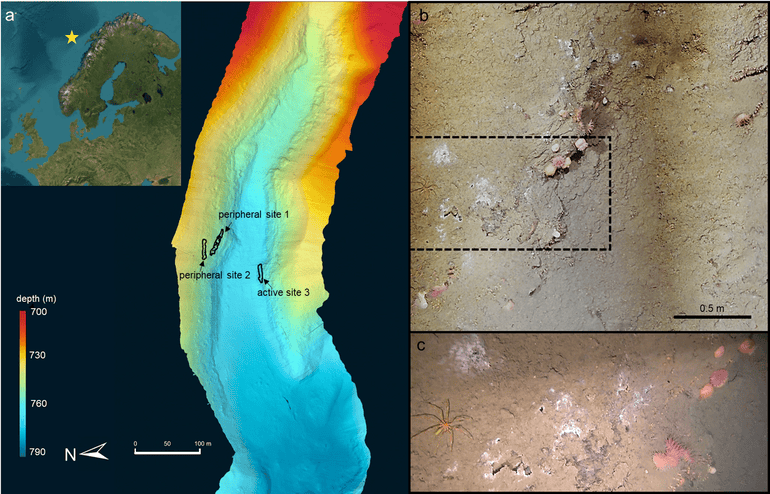
Sen et al. investigates benthic communities surrounding submarine groundwater discharge (SGD)-driven methane seeps in the Lofoten–Vesterålen canyons off northern Norway. Using seafloor mosaics and stable isotope analyses, the authors show that seep peripheries (“chemotones”) are far more diverse and species-rich than the active seep centers, which are dominated by siboglinid worms. Peripheral zones host abundant suspension feeders such as corals and anemones. Isotope data reveal chemosynthetically derived carbon in peripheral fauna, indicating carbon export beyond seep boundaries—even during polar night. The study highlights how cryosphere-driven SGD seeps shape Arctic biodiversity, trophic dynamics, and ecosystem connectivity beyond their immediate footprint.
|
|
|
|
|
|
|
|
|
|
Methane as architect: how seafloor seepage shapes biodiversity at the Nyegga cold seeps
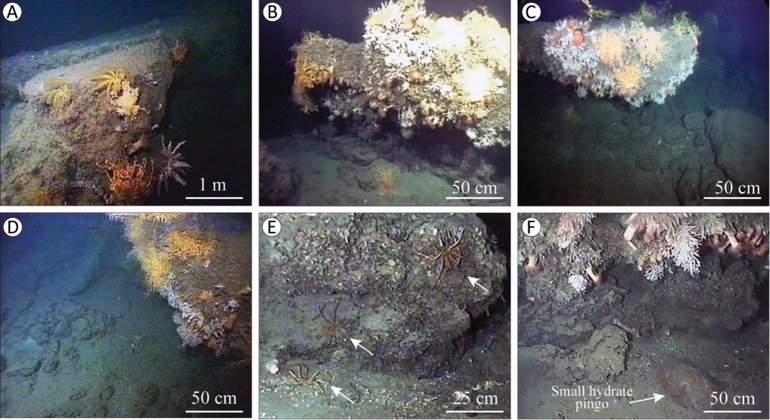
The study explores how geological processes shape biological communities at the Nyegga methane seep site along the mid-Norwegian continental margin. Using ROV surveys, high-resolution bathymetry, and microbial 16S rRNA sequencing, researchers show that methane seepage creates diverse microhabitats that structure ecosystem complexity. Four main habitats were identified: hydrate pingos with siboglinid tubeworms and bacterial mats; cryptic spaces among carbonate blocks hosting sessile fauna; carbonate ledges supporting suspension feeders; and sediment pools inhabited by low-activity demersal fishes. Microbial communities were dominated by cold-adapted taxa, with potential symbioses in sea spiders. The findings highlight methane seepage as a key ecosystem engineer linking geology, microbial processes, and deep-sea biodiversity.
|
|
|
|
|
|
|
| Across Our Network |
|
|
|
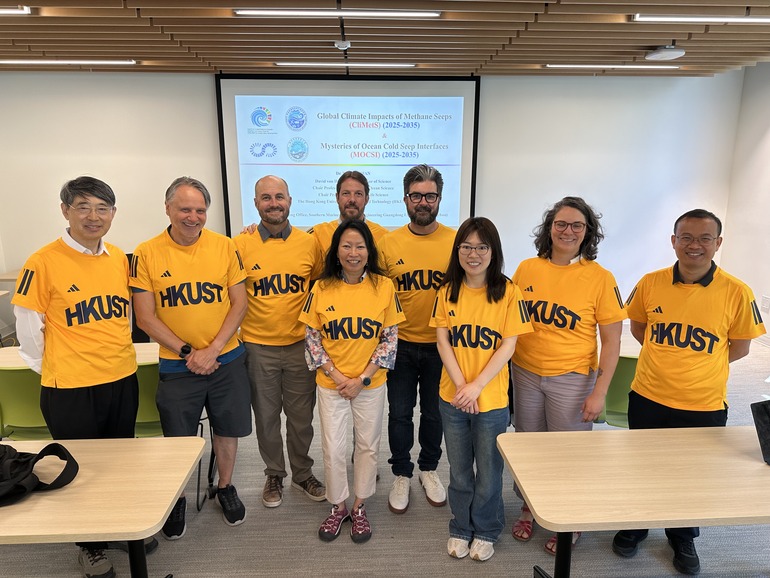
Preparation for CliMetS-North America Workshop Kicked Off
Prof. Peiyuan Qian, Programme Leader of CliMetS, met with members of the programme’s North America Working Group at the University of British Columbia to provide updates on the latest developments within CliMetS and MOCSI, and to discuss preparations for the upcoming CliMetS–North America Workshop.
The workshop is scheduled to take place in December 2026, immediately following the AGU Annual Meeting in San Francisco, USA. It will focus on assessing the current state of cold seep research in North America, identifying key challenges and priorities, and exploring opportunities to develop a coordinated regional action plan.
We will share more information at later stage. Please stay tuned if you are interested.
|
|
|
|
|
|
Turning Ideas into Action: CliMetS Hosts Ocean Decade Project Proposal Workshops
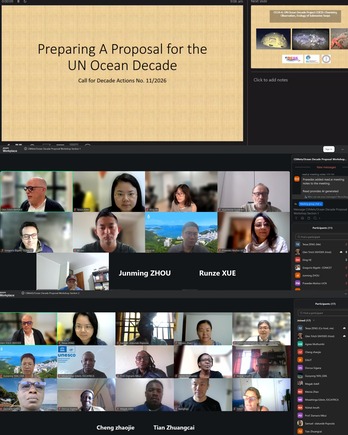
Since the launch of the Ocean Decade Call for Decade Actions No. 11/2026, we received a strong response, with numerous expressions of interest submitted for potential Decade Project development under the programme of CliMetS.
To support applicants in preparing competitive proposals, Dr. Glen Snyder (glensny@ust.hk) from the CliMetS/MOCSI coordination team—who brings extensive experience with successful Decade Project endorsements—hosted two Zoom workshop sessions titled "Preparing A Proposal for the UN Ocean Decade". The sessions provided a step-by-step overview of the application process, shared practical tips, and addressed participants’ questions.
Workshop materials, including presentation slides and recordings, are available at the link below.
|
|
|
|
|
|

|
|
|
Guangzhou Marine Laboratory Inspires Young Ocean Stewards at “Decoded Ocean” Open House
On June 6, 2026, Southern Marine Science and Engineering Guangdong Laboratory (Guangzhou), in partnership with the Nansha District Association for Science and Technology, hosted a free public open house titled “Explore the Ocean World, Protect Our Blue Home” to celebrate World Oceans Day and National Marine Awareness Day. The event welcomed 50 families with children aged 9–12 for an immersive marine science experience. Researchers introduced two UN-endorsed programmes—CliMetS and MOCSI—and showcased deep-sea cold seep ecosystems, advanced observation technologies, coral conservation, and China’s deep-sea exploration capabilities. Interactive exhibits, including VR experiences and ecosystem puzzles, engaged participants and promoted ocean conservation awareness.
|
|
|
|
|
|
|
|
|
|
World Oceans Day Exhibition Highlights Deep-Sea Science and Ocean Stewardship
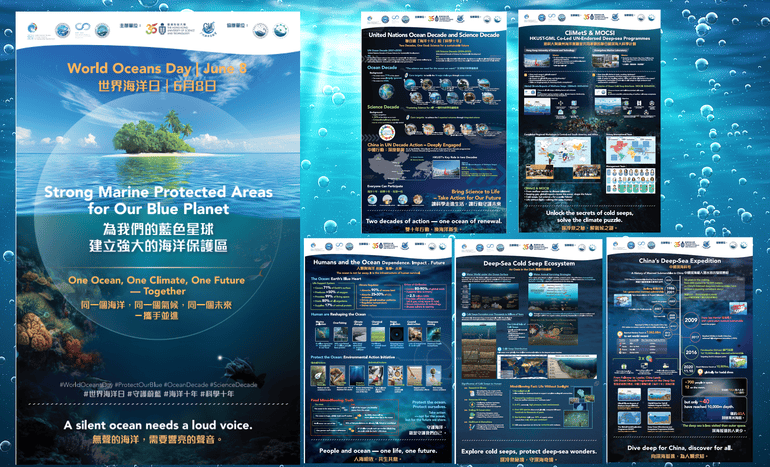
On 8 June 2026, Guangzhou Marine Laboratory (GML) and The Hong Kong University of Science and Technology (HKUST) jointly hosted a World Oceans Day public exhibition at HKUST, featuring GML-led international programmes CliMetS and MOCSI.
The event invited visitors to explore four themed exhibition zones covering UN ocean initiatives, humanity’s connection to the ocean, deep-sea cold seep ecosystems, and China’s cutting-edge ocean research innovations, exemplified by its flagship deep-sea submersibles of Jiaolong, Shen-Hai-Yong-Shi, and Fendouzhe. Real deep-sea specimens, striking photography, and documentary screenings vividly brought the mysteries of the deep ocean to life.
Addressing pressing challenges such as ocean warming, acidification, biodiversity loss, and pollution, the exhibition fostered public awareness and encouraged ocean stewardship.
|
|
|
|
| Around the World |
|
|
|
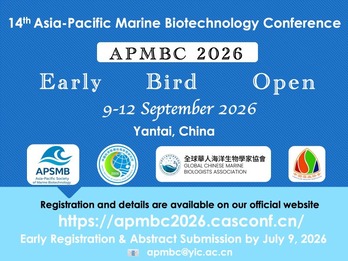
APMBC 2026 calls for early bird registration
The 14th Asia-Pacific Marine Biotechnology Conference will be held from September 9-12, 2026, in Yantai, Shandong Province, China. Under the theme "Marine BioTech for Sustainable Human-Ocean Harmony," APMBC 2026 aims to establish itself as the premier marine biotechnology platform in the Asia-Pacific region, driving innovation, fostering international collaboration, and advancing the sustainable blue economy. Early bird registration is open until July 9, 2026.
|
|
|
Date:
|
Sept 9-12, 2026
|
|
Venue:
|
Yantai, China
|
|
|
|
|
|
|
| Opportunities and Resources |
|
|
|
Call for Decade Actions No. 11/2026 Now Open!
The Ocean Decade' Call for Decade Actions No. 11/2026 was officially launched on 15 April 2026. As one of the participating programme in the Call, CliMetS welcomes all initiatives that align with our thematic and geological priorities.
To support your proposal development, Dr. Glen Snyder from the CliMetS/MOCSI coordination team, who has successful experience with Decade Project endorsement, will serve as you proposal coach. Interested participants are welcome to consult with him (glensny@ust.hk) for guidance on project design and proposal writing. We also plan to hold a zoom meeting for Q&A specific to projects proposed under CliMetS in due course.
|
|
|
|
|
|
|
|
|
Have an update to share in our next issue — or feedback for us to improve?
Drop us a note at hkogml@ust.hk. Your contributions and insights help shape a stronger, more connected CliMetS/MOCSI community. |
| Copyright © HKUST. All Rights Reserved. Powered by MTPC. |
|
|