|
If you are having problems viewing this email, click here.
|
|
|
|
|
| May 2026 |
|
|
|
|
This issue of SeepSync showcases major advances in seep research, including the discoveries of a previously overlooked mechanism, genomic hotspots driving ANME-1 diversification, microbially derived black carbon as a newly recognized carbon sink, and the revision of the notion of “life in the slow lane”. We also highlight GML’s new 3,000 m deep-sea cold seep monitoring station, the successful completion and significant findings of three remarkable cruises led by scientists of the CliMetS community, and the recent UNESCO-IOC delegation visit in HKUST, strengthening global collaboration in ocean science and sustainable blue development.
Subscribe to our newsletter and catch our next wave of updates!
Please drop us a note at hkogml@ust.hk, if you wish to share your achievements, news or any updates in our next issue.
|
|
|
|
| Research Highlight |
|
|
|
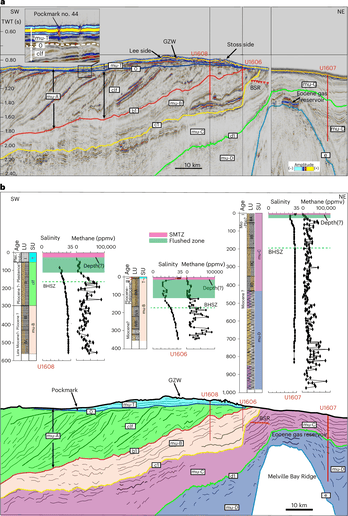
Gas hydrate dissolution triggered by subglacial groundwater flushing during deglaciation
Using data from IODP Expedition 400 and 3D seismic surveys offshore Northwest Greenland, Wang, J., Newton, A.M.W., Huuse, M. et al. identify low-methane, low-salinity zones within the gas hydrate stability zone beneath the continental shelf. Despite widespread methane availability, its absence at drill sites indicates local hydrate destabilization. Seafloor pockmarks suggest past fluid escape. The authors propose that hydraulic gradients during the last glacial cycle drove subglacial groundwater flow, flushing sediments and releasing methane during ice retreat. This previously overlooked mechanism may be more efficient than conventional hydrate dissociation and has important implications for polar carbon reservoirs and abrupt climate feedbacks.
|
|
|
|
|
|
|
|
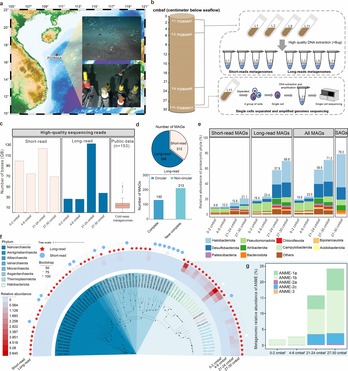
Diversification in ANME-1 archaea is associated with the presence of highly variable genomic hotspots
Zhou, YL., Feng, JC., Lu, R. et al. investigate diversification mechanisms in ANME-1 anaerobic methanotrophic archaea from deep-sea cold seeps. Using high-quality circular metagenome-assembled genomes, the authors identify highly variable genomic “hotspots” that drive differentiation at species and strain levels. These hotspots are enriched in genes related to prokaryotic defense systems, transport functions, and methane metabolism. Functional experiments confirm that ANME-1 hicAB operons act as toxin–antitoxin systems, likely involved in stress responses. The findings reveal how genomic variability contributes to ANME-1 evolution and ecological adaptation, advancing understanding of microbial speciation in methane-driven deep-sea ecosystems.
|
|
|
|
|
|
|
|
Rapid de novo assembly of animal-microbe biofilter to mitigate seabed methane leakage
Liang, Q., Deng, L., Xie, R., et al. report multi-year, in situ monitoring of a human-induced deep-sea methane seep, revealing that a methane-consuming ecosystem can establish within 1–2 years. Rapid succession led to a mature seep community, with simultaneous growth of aerobic and anaerobic methanotrophs and burrowing fauna mixing sediments to depths over 50 cm. These animal–microbe interactions enabled efficient methane removal (30–60 mmol/m²/day) through coupled carbon, nitrogen, and sulfur cycling. The findings show that abrupt methane release can quickly generate an effective benthic “methane biofilter,” improving understanding of natural mitigation capacity and its role in climate risk assessments.
|
|
|
|
|
|
|
Cold seep seafloor observatories revise the notion of “life in the slow lane”
Teske, A., revisits the traditional contrast between dynamic hydrothermal vents and stable cold seeps. While vents are known for rapid ecological turnover, cold seeps have been viewed as slow-developing systems. However, the multi-year study conducted by Liang, Q., Deng, L., Xie, R., et al. in the South China Sea shows that methane hydrate leakage can trigger rapid microbial colonization, with anaerobic methane-oxidizing communities forming within 1–2 years and maturing alongside macrofauna within six years. These findings suggest cold seeps can respond quickly to methane release.
|
|
|
|
|
|
|
|
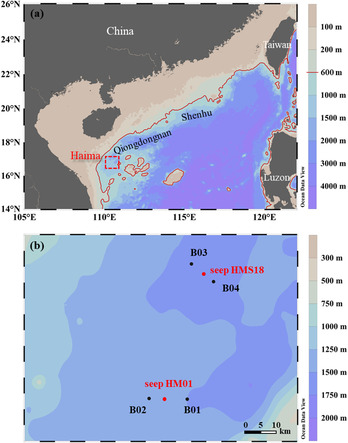
Fate of deep methane bubble plumes at the Haima cold seeps in the South China Sea
The study examines deep methane bubble plumes at the Haima cold seeps (1408–1522 m) in the South China Sea using field observations and numerical simulations. Hydrate-coated bubbles rose rapidly but stopped near the hydrate stability zone (HSZ) boundary, shaped by mesoscale eddies and tides. Plume height and spread varied with local currents, with limited lateral transport. Dissolved methane concentrations dropped sharply above seabed vents, remaining trapped by stratification. Simulations predicted a secondary methane anomaly at the HSZ boundary from hydrate dissociation. Findings inform monitoring strategies for methane leakage during gas hydrate exploitation.
|
|
|
|
|
|
|
|
|
|
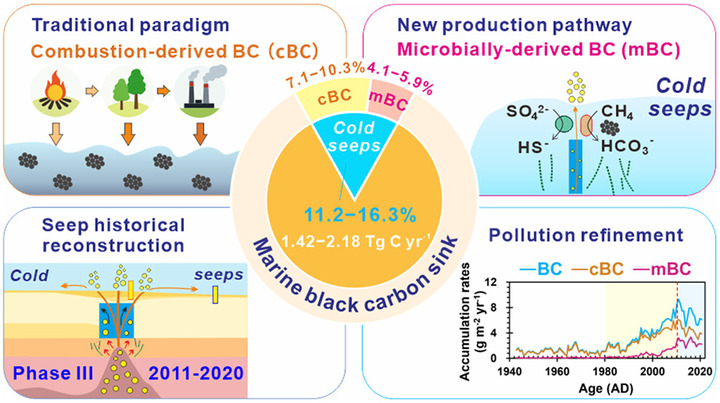
The Substantial Yet Unaccounted Carbon Sink: Microbially-Derived Black Carbon in Cold Seep Sediments
Xiao, X., Liang, QY., and Zhao, YM., et al. identify a previously unrecognized source of marine black carbon (BC): microbially-derived black carbon (mBC) formed at deep-sea cold seeps. Geochemical and isotopic evidence from the Qiongdongnan Basin links mBC formation to anaerobic methane oxidation. During active seepage (2011–2020), mBC accounted for 31–43% of sedimentary BC, with accumulation rates of 1.58–3.36 g m⁻² yr⁻¹. Globally, cold seeps may contribute 0.52–0.79 Tg mBC annually, representing up to 5.9% of the total marine BC burial flux. The findings redefine marine BC sources and highlight mBC as an important carbon sink and potential paleo-methane proxy.
|
|
|
|
|
|
|
| Across Our Network |
|
|
|
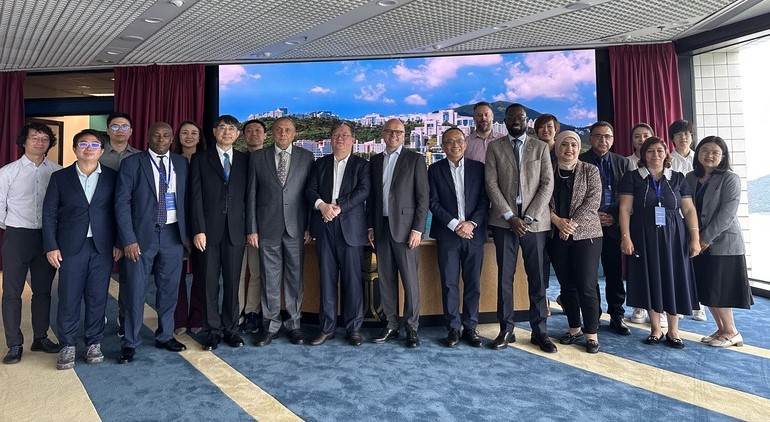
Advancing Ocean Science and UN Decade Initiatives with UNESCO
HKUST welcomed a high-level UNESCO delegation led by Vidar Helgesen, Executive Secretary of the Intergovernmental Oceanographic Commission (IOC), to strengthen global collaboration in marine science and sustainable ocean development. The delegation met with HKUST leadership and Ocean Science faculty to explore partnerships in marine technology, ocean engineering, climate science, AI, and the blue economy. The visit highlighted HKUST’s UN-endorsed Ocean Decade/Science Decade initiatives—CliMetS, MOCSI, and SEPRESS—and its strengths in marine robotics and coastal ecology, reinforcing cooperation with UNESCO to advance ocean sustainability.
|
|
|
|
|
|
|
|
|
|
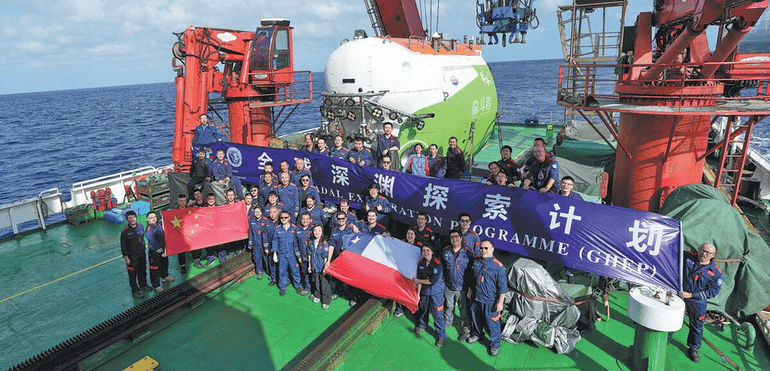
Deepest Chemosynthetic Ecosystem Discovered in Landmark China–Chile Hadal Trench Expedition
The Joint China-Chile Atacama Trench Expedition, organized by the UN-endorsed Global Hadal Exploration Programme, yielded major scientific discoveries. Using the full-ocean-depth submersible Fendouzhe, researchers conducted 63 dives in the 156-day expedition, most below 6,000 meters. The team identified the deepest known chemosynthetic ecosystem in the Southern Hemisphere, supporting life without sunlight and strengthening evidence for a global chemosynthetic corridor. Scientists also discovered multiple deep-sea snailfish species and documented abundant benthic organisms—many believed to be new species—while mapping earthquake-induced seafloor ruptures, offering new insight into how seismic activity shapes deep-sea habitats and biodiversity.
|
|
|
|
|
|
|
|
|
|
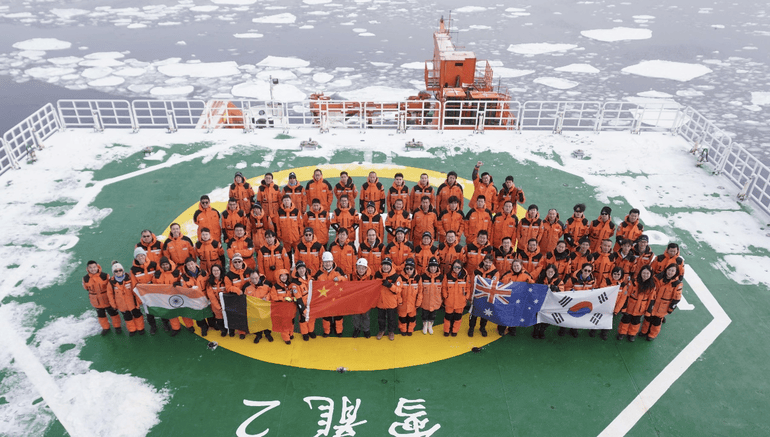
Antarctic Expedition Delivers Breakthrough Insights into Sea–Air Methane Fluxes
The 42nd Chinese Antarctic Expedition successfully concluded its 2026 autumn Prydz Bay cruise aboard Xuelong 2, marking China’s first comprehensive autumn survey of the region. The joint mission involved 97 researchers from 19 institutions across six countries. Dr. Yongji Huang of Guangzhou Marine Laboratory conducted continuous underway monitoring of sea–air methane fluxes using the team’s self-developed intelligent greenhouse gas flux system. Integrated with the vessel’s seawater circulation and meteorological observations, the system generated high-resolution methane flux data, particularly across areas with reported cold seep activity. The results provide critical baseline evidence for assessing polar methane dynamics, carbon cycling, and climate feedbacks in Antarctic waters.
|
|
|
|
|
|
|
|
|
GML Advances Deep-Sea Innovation with Successful Deployment of 3,000‑Meter Cold Seep Intelligent Monitoring Station
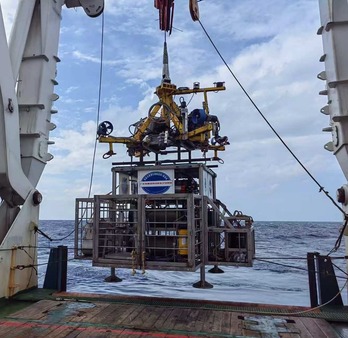
The Guangdong Province Key R&D project on developing an in-situ intelligent monitoring and detection station for submarine cold seeps has successfully passed final acceptance. Led by the Southern Marine Science and Engineering Guangdong Laboratory (Guangzhou) with the Guangzhou Marine Geological Survey, the team built a world-leading system capable of operating at 3,000 m depth for six months. After a 193-day seafloor trial in the northern South China Sea, the station achieved full task completion and advanced to Technology Readiness Level 7. The platform supports deep-sea resource exploration, ecological research, and earth system science, with strong application prospects.
|
|
|
|
|
|
|
|
|
|
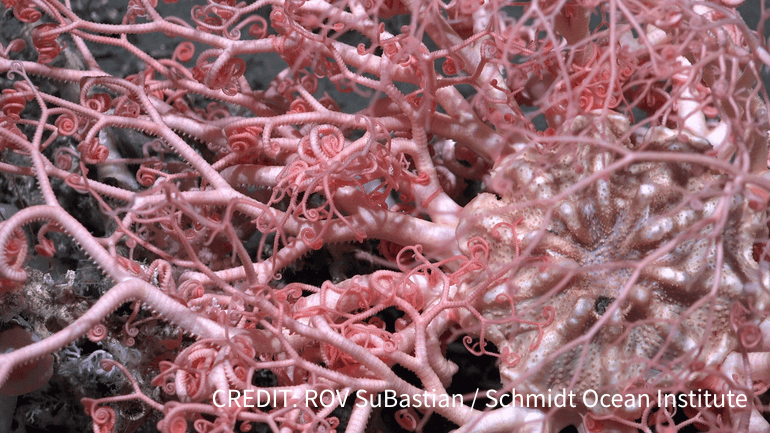
Cold Seep Expedition Reveals 28 New Species and Massive Coral Reef in Argentina’s Deep Sea
An expedition led by Dr. María Emilia Bravo aboard the Schmidt Ocean Institute’s R/V Falkor (too) has documented 28 suspected new species in Argentina’s deep sea, spanning from Buenos Aires to Tierra del Fuego. Discoveries include sea snails, corals, worms, and urchins, many associated with the largest known cold-water coral reef formed by Bathelia candida, covering at least 0.4 square kilometers. The team also identified an active cold seep ecosystem and Argentina’s first recorded deep-water whale fall at 3,890 meters. Footage captured rare species like the giant phantom jellyfish. Researchers also found plastic debris, underscoring pollution threats to these fragile, vulnerable marine ecosystems.
|
|
|
|
|
|
|

|
|
|
Confirmed Thematic Session at 2026 Global Conference on the International Decade of Sciences for Sustainable Development
We are pleased to announce that our thematic session, “Deep-sea Chemosynthetic Ecosystems at the Climate-Biodiversity Resource Nexus: Science, Innovation, and Governance for a Sustainable Ocean Future,” has been officially confirmed by the organizers of the 2026 Global Conference on the International Decade of Sciences for Sustainable Development (IDSSD).
The session will feature a synthesis panel presentation and open floor discussion to promote global understanding of deep-sea chemosynthetic ecosystems and their critical role at the intersection of climate regulation, biodiversity conservation, and emerging marine resource frontiers.
|
|
|
Date:
|
16 July 2026
|
|
Time:
|
16:50–18:00
|
|
Venue:
|
Room XI, UNESCO Headquarters, Paris
|
|
|
|
|
|
|
|
| Around the World |
|
|
|
APMBC 2026 calls for early bird registration
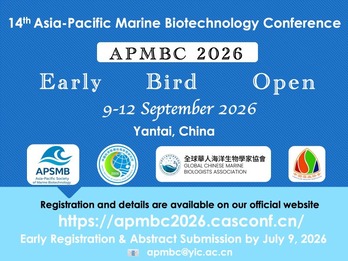
The 14th Asia-Pacific Marine Biotechnology Conference will be held from September 9-12, 2026, in Yantai, Shandong Province, China. Under the theme "Marine BioTech for Sustainable Human-Ocean Harmony," APMBC 2026 aims to establish itself as the premier marine biotechnology platform in the Asia-Pacific region, driving innovation, fostering international collaboration, and advancing the sustainable blue economy. Early bird registration is open until July 9, 2026.
|
|
|
Date:
|
Sept 9-12, 2026
|
|
Venue:
|
Yantai, China
|
|
|
|
|
|
|
| Opportunities and Resources |

|
|
|
Call for Decade Actions No. 11/2026 Now Open!
The Ocean Decade' Call for Decade Actions No. 11/2026 was officially launched on 15 April 2026. As one of the participating programme in the Call, CliMetS welcomes all initiatives that align with our thematic and geological priorities.
To support your proposal development, Dr. Glen Snyder from the CliMetS/MOCSI coordination team, who has successful experience with Decade Project endorsement, will serve as you proposal coach. Interested participants are welcome to consult with him (glensny@ust.hk) for guidance on project design and proposal writing. We also plan to hold a zoom meeting for Q&A specific to projects proposed under CliMetS in due course.
|
|
|
|
|
|
|
|
|
Have an update to share in our next issue — or feedback for us to improve?
Drop us a note at hkogml@ust.hk. Your contributions and insights help shape a stronger, more connected CliMetS/MOCSI community. |
| Copyright © HKUST. All Rights Reserved. Powered by MTPC. |
|
|