|
If you are having problems viewing this email, click here.
|
|
|
|
|
| April 2026 |
|
|
|
|
We are pround to announce the official launch of SeepSync! The monthly newsletter of CliMetS and MOCSI dedicated to sharing news, insights, and collaborations from the world of seep and ocean science.
Our very first issue brings to you an encouraging message by the Programme Leaders Profs. Peiyuan QIAN, Si ZHANG, and Jingchun FENG, important methane seep findings from a three-year long research in the South China Sea, latest news of CliMetS/MOCSI network, and an acition call from Ocean Decade!
Subscribe to our newsletter and catch our next wave of updates!
Please drop us a note at hkogml@ust.hk, if you wish to share your achievements, news or any updates in our next issue.
|
|
|
|
|
|
Message from the Programme Leaders
Dear colleagues, partners, and friends,
It is with great pride and optimism that we share this message marking a new chapter for our programmes — CliMetS (Global Climate Impacts of Methane Seeps) and MOCSI (Mysteries of Ocean Cold Seep Interfaces).
We are especially pleased to announce that CliMetS and MOCSI have both received endorsements from UNESCO, a recognition of their scientific relevance to marine research and potential contribution to global climate challenges. This milestone underscores our shared commitment to advancing cold seep studies, ocean observation, and climate science for sustainable development.
We are pleased to report that multiple activities are already in progress, generating strong momentum across our network. Through CliMetS, we launched a call for Expressions of Interest (EOI) for the programme’s first research cruise in the Western Indian Ocean and were thrilled by the outstanding number of applications received — a testament to the enthusiasm and engagement within our community. Preparations for the cruise are advancing smoothly, with the expedition scheduled to set sail in early 2027 as planned. In addition, MOCSI will convene a thematic session at the 2026 Global Conference on the International Decade of Sciences for Sustainable Development, taking place in Paris on 16 July.
As our activities expand, so does our need for more regular, transparent, and accessible communications. Our monthly newsletter SeepSync is designed to meet that need. It will serve as a platform for sharing news, progress, opportunities, and stories from across CliMetS, MOCSI, and the global seep research community. Each issue will bring highlights from programmes and partners worldwide, helping to ensure that our collective work is visible, connected, and impactful.
I warmly invite all of you to contribute your achievements, updates, materials, and stories from your work to SeepSync— so that our communications truly reflect the diversity and strength of our community. Together, we can continue to build momentum and sustain this spirit of collaboration as we advance our programmes and their contribution to global environmental science.
Thank you for your continued commitment and engagement.
Warm regards,
|
|
|
|
|

|
Prof. Peiyuan QIAN
Programme Leader of CliMetS and MOCSI
|
|
|
|
|
|
Prof. Si ZHANG
Programme Co-Leader of CliMetS and MOCSI
|
|
|
|
|

|
Prof. Jingchun FENG
Programme Co-Leader of CliMetS and MOCSI
|
|
|
|
|
|
|
|
| Research Highlight |
|
|
|
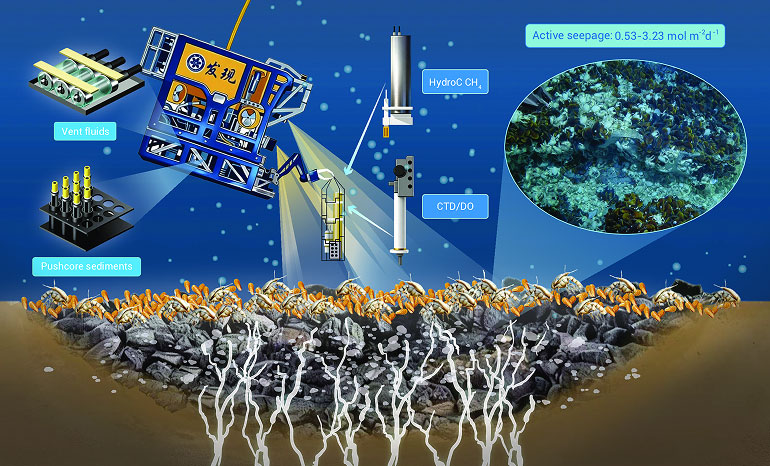
In situ observations of methane dynamics in an active cold seep of the Formosa Ridge, the South China Sea
Cao L., Lian C., Ran X., et al. (2026) present three years of observations from cold seep site F in the South China Sea, where in situ observation data and steady‑state modelling were used to quantify methane fluxes and transport processes. Results show that horizontal advection is the dominant mechanism for methane dispersion and removal, followed by vertical diffusion and microbial oxidation. The estimated flux from active seepage (0.53–3.23 mol m⁻² d⁻¹) is several orders of magnitude higher than that from the sediment-water interface, equating to 0.70–4.22 Gmol yr⁻¹ released along the SCS continental margin. When scaled globally, cold seeps could discharge approximately 126 Tg C yr⁻¹ as dissolved methane. These findings indicate that deep-sea cold seeps represent a larger and more dynamic source of oceanic methane than previously recognized.
|
|
|
|
|
|
|
|
|
Evolutionary convergence and trophic diversity in hot vent and cold seep shrimps showcase a continuum of symbiosis
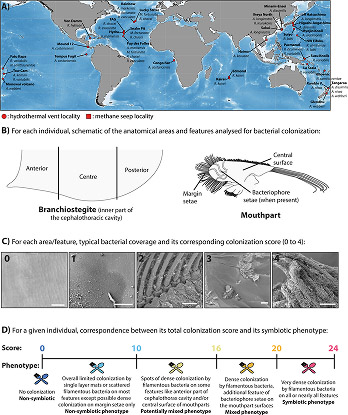
Examining 22 species worldwide, Methou P., Mathieu-Resuge M., Michel L., et al. (2026) found a gradient of bacterial colonization within shrimp gill cavities, reflecting varied trophic strategies. Isotopic and lipid analyses confirmed differences in dependence on chemosynthetic nutrition. Phylogenetic results indicate at least two independent origins of chemosymbiosis, pointing to evolutionary convergence. Symbiotic forms typically inhabit hotter, geofluid‑rich microhabitats, though exceptions suggest additional constraints. The study highlights gradual evolutionary transitions toward symbiosis and underscores the predictability and ecological importance of these adaptations in deep‑sea environments.
|
|
|
|
|
|
|
|
Deep Sea Faces Emerging Threats as Human Impacts Extend into Earth’s Last Pristine Frontier
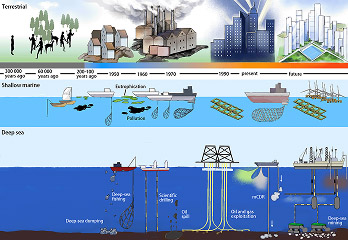
Yasuhara M., Zhang J., Danovaro R., et al (2026) compare human‑driven degradation across terrestrial, shallow‑marine, and deep‑sea environments. While land and coastal ecosystems have suffered millennia of human impacts—from early agriculture to industrialization—major deep‑sea disturbances only began in the mid‑20th century with trawling. Today, emerging pressures such as deep‑seabed mining and marine carbon dioxide removal (mCDR) pose serious new threats. Although the deep sea still retains far greater ecological integrity than rainforests or coral reefs, it may soon face comparable degradation if industrial exploitation proceeds unchecked.
|
|
|
|
|
|
| Across Our Network |

|
|
|
© EB Adventure Photography/Shutterstock
Confirmed Thematic Session at 2026 Global Conference on the International Decade of Sciences for Sustainable Development
We are pleased to announce that our thematic session, “Deep-sea Chemosynthetic Ecosystems at the Climate-Biodiversity Resource Nexus: Science, Innovation, and Governance for a Sustainable Ocean Future,” has been officially confirmed by the organizers of the 2026 Global Conference on the International Decade of Sciences for Sustainable Development (IDSSD).
The session will feature a synthesis panel presentation and open floor discussion to promote global understanding of deep-sea chemosynthetic ecosystems and their critical role at the intersection of climate regulation, biodiversity conservation, and emerging marine resource frontiers.
|
|
|
Date:
|
16 July 2026
|
|
Time:
|
16:50–18:00
|
|
Venue:
|
Room XI, UNESCO Headquarters, Paris
|
|
|
|
|
|
|
|
|
|
|
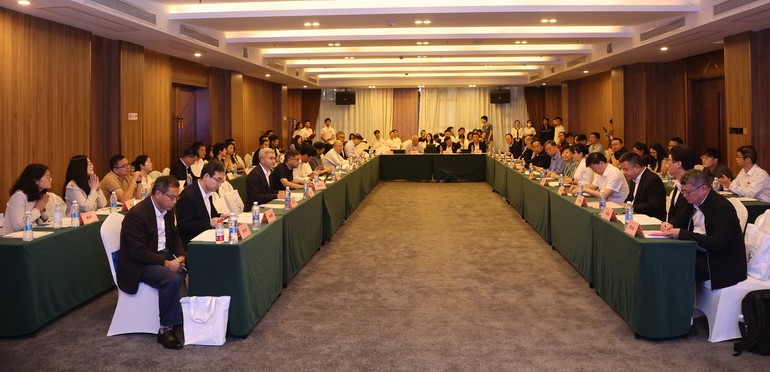
Guangzhou Marine Laboratory Successfully Holds Seminar on Implementation Plans for UN Endorsed Decade Programmes
On April 24, Southern Marine Science and Engineering Guangdong Laboratory (Guangzhou) (GML) hosted the Expert Seminar on Implementation Plans for UN‑endorsed Decade Programmes in Guangzhou, China. The seminar focused on in-depth discussions of the implementation plans for two UN endorsed Decade programmes— CliMetS and MOCSI.
Prof. Peiyuan Qian systematically introduced the strategic background, overall objectives, framework design, and implementation progress of the two programmes. He emphasized that CliMetS and MOCSI represent not only scientific exploration of the oceans, but also major initiatives serving global climate governance and sustainable ocean development.
|
|
|
|
|
|
|
| Around the World |
|
|
|
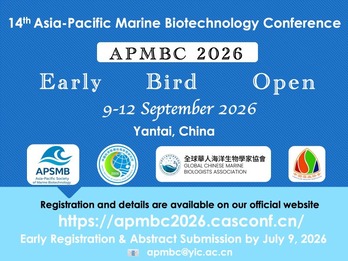
APMBC 2026 calls for early bird registration
The 14th Asia-Pacific Marine Biotechnology Conference will be held from September 9-12, 2026, in Yantai, Shandong Province, China. Under the theme "Marine BioTech for Sustainable Human-Ocean Harmony," APMBC 2026 aims to establish itself as the premier marine biotechnology platform in the Asia-Pacific region, driving innovation, fostering international collaboration, and advancing the sustainable blue economy. Early bird registration is open until July 9, 2026.
|
|
|
Date:
|
Sept 9-12, 2026
|
|
Venue:
|
Yantai, China
|
|
|
|
|
|
|
|
|
|
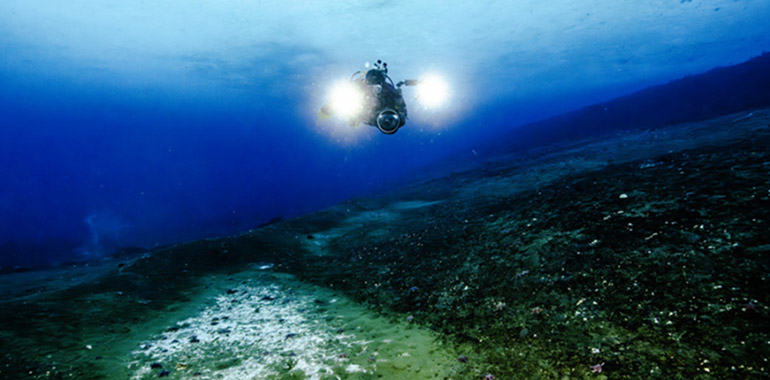
Antarctic methane discoveries skyrocket
New methane seeps are being discovered at an astonishing rate in Antarctic waters. According to Dr Sarah Seabrook of Earth Sciences New Zealand, dozens of new sites have been found across shallow Antarctic coastal waters, marking a major shift in regional methane release. These seeps, first detected in 2012, are now appearing at an accelerating rate, raising concern that previously unaccounted methane emissions could enter the atmosphere and intensify climate change.
|
|
|
|
|
|
|
| Opportunities and Resources |
|
|
|
Call for Decade Actions No. 11/2026 Now Open!
The Ocean Decade' Call for Decade Actions No. 11/2026 was officially launched on 15 April 2026. As one of the participating programme in the Call, CliMetS welcomes all initiatives that align with our thematic and geological priorities.
To support your proposal development, Dr. Glen Snyder from the CliMetS/MOCSI coordination team, who has successful experience with Decade Project endorsement, will serve as you proposal coach. Interested participants are welcome to consult with him (glensny@ust.hk) for guidance on project design and proposal writing. We also plan to hold a zoom meeting for Q&A specific to projects proposed under CliMetS in due course.
The Ocean Decade will organize two virtual Q&A sessions to support interested applicants. We strongly encourage participants planning to submit proposals to join one of these sessions.
Information Session #1
4 May 2026, from 16:30 to 17:30 UTC. Register here.
Information Session #2
5 May 2026, from 11:30 to 12:30 UTC. Register here.
|
|
|
|
|
|
Have an update to share in our next issue — or feedback for us to improve?
Drop us a note at hkogml@ust.hk. Your contributions and insights help shape a stronger, more connected CliMetS/MOCSI community. |
| Copyright © HKUST. All Rights Reserved. Powered by MTPC. |
|
|